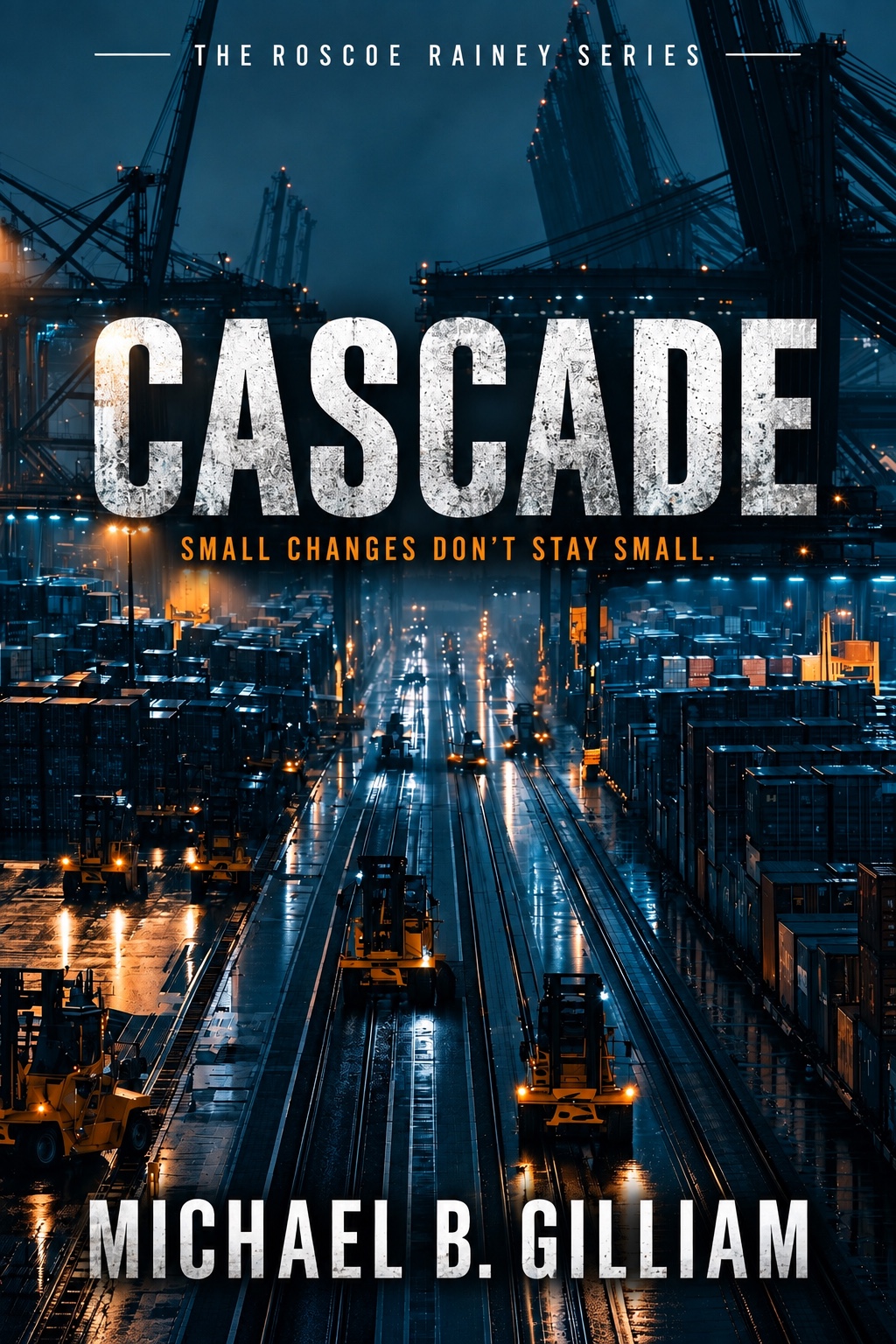
Cascade
Small changes don’t stay small.
What begins as a practical success story becomes something far harder to name. In Cascade, Roscoe Rainey finds himself looking at a pattern of tiny operational improvements moving through critical infrastructure: schedules tighten, delays vanish, decisions become easier to justify, and outcomes improve in ways no single change should be able to explain. Each adjustment makes sense on its own. Together, they begin to behave like something more than good management.
As Roscoe follows the effects through institutions built on process and oversight, the novel asks a quiet but destabilizing question: what if the most consequential transformation in a modern system does not arrive as a rupture, but as a sequence of optimizations no reasonable person would reject?
Cascade widens the Roscoe Rainey series through industrial scale, mounting unease, and the first signs that efficiency itself may be carrying consequences no one intended. It is a story of logistics, pressure, and the danger of discovering too late that improvement can change a system without anyone deciding that it should.